One of the most common complaints in product development is the "Why did we do this?" phenomenon.
A designer and a PM spend two weeks debating a complex UX flow. They finally make a decision, build the feature, and ship it. Six months later, a new engineer joins and asks, "Why didn't we just use a modal here?" Nobody remembers the original debate, so they reopen the conversation, wasting days rehashing old arguments.
The Architecture Decision Record (ADR)
Engineering teams have solved this problem with ADRs (Architecture Decision Records). Product and design teams need the exact same thing for user experience and feature scope.
Here is what a good Product Decision Record looks like:
Section | Purpose |
|---|---|
Context | What was the problem we were solving? |
Options Considered | What paths did we explore? (Include screenshots) |
The Decision | What did we choose and why? |
Trade-offs | What are we explicitly choosing not to support? |
Making Decisions Searchable
Writing the decision down is only half the battle. If that decision is buried in a Google Doc titled Feature_V3_Final_Final.docx, it is essentially lost to history.
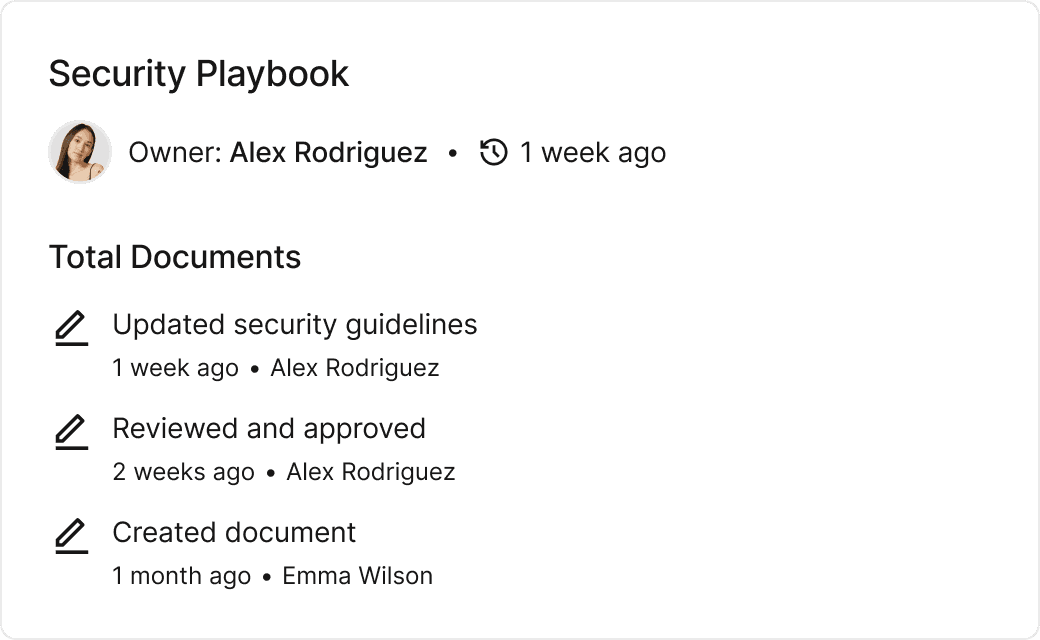
By storing decision records in Slivo, they become part of the company's searchable brain. When that new engineer asks, "Why don't we use modals for checkout?", Slivo instantly surfaces the specific decision record from six months ago, explaining the accessibility constraints that led to the choice.
The debate is resolved in thirty seconds, without a single meeting. That is the power of searchable context.